
Mental Health Changes in Perimenopause
Why Anxiety, Brain Fog, and Mood Swings Are Often the First Signs
For many women, anxiety, irritability, brain fog, and low motivation are some of the earliest signs of perimenopause, often showing up years before hot flashes or missed periods.”
When women think of perimenopause, they picture hot flashes and skipped cycles. What they don’t expect are the quiet emotional and cognitive shifts that often come first.
Feeling more anxious than usual.
Snapping at people you love.
Crying unexpectedly.
Making mountains out of molehills.
Feeling distracted or unable to focus.
Losing motivation for things that once energized you.
These changes can start subtly until one day you realize something feels different. Let’s talk about why this happens and why so many women are misdiagnosed or dismissed during this phase.
Are Mental Health Changes Really a Sign of Perimenopause?
Yes, and they’re incredibly common.
Perimenopause is not just a reproductive transition. It’s a neurological one. Estrogen and progesterone influence serotonin, dopamine, and GABA the brain chemicals that regulate mood, focus, stress tolerance, and emotional resilience.
When these hormones fluctuate (and they fluctuate unpredictably in perimenopause), your brain feels it.
This can show up as:
new or worsening anxiety
irritability
emotional sensitivity
low mood
difficulty focusing
ADHD-like symptoms in your 40s
brain fog
social withdrawal
And because these changes often happen before physical symptoms, many women never connect them to hormones.
Why Do Hormone Fluctuations Affect the Brain So Strongly?
Estrogen plays a critical role in serotonin and dopamine regulation the very systems that stabilize mood and motivation.
When estrogen spikes and dips:
serotonin signaling shifts
dopamine becomes less consistent
cortisol (your stress hormone) becomes more reactive
sleep quality declines
emotional regulation feels harder
Progesterone also matters. It has a calming effect on the brain by supporting GABA. When progesterone drops, which often happens earlier in perimenopause, many women feel more anxious, overstimulated, or emotionally reactive.
This is why women often say:
“I don’t feel like myself.”
“I used to handle stress better.”
“I feel thinner-skinned.”
This isn’t weakness. It’s neurobiology.
Why Are Women Often Labeled Instead of Evaluated Holistically?
Because perimenopause is frequently overlooked.
When a woman in her mid-40s says, “I’ve been feeling anxious lately,”
the conversation often centers on anxiety, not hormones.
That was my experience.
At 46, I found myself crying for no reason, feeling irritable and withdrawn. I had never struggled with mental health issues before. When I brought it up to my GYN, I was handed a prescription for an antidepressant and told to find a good therapist as I was walking out the door.
Let me be clear: medication can absolutely be appropriate and life-changing. That is not the issue.
The issue is when fluctuating hormones aren’t even considered.
Too often, women are:
diagnosed with anxiety for the first time in midlife
labeled with ADHD in their late 40s
told it’s stress
told it’s aging
told their labs are “normal”
Meanwhile, perimenopause is driving many of the symptoms.
It’s Not Always Easy to Know What Your Body Needs
This is where things get confusing.
Some women need stress support.
Some need sleep regulation.
Some need progesterone.
Some need therapy.
Some need hormone therapy.
Many need a combination.
It’s not always obvious what your starting point should be, especially when symptoms overlap.
If you’re unsure where to begin, taking my quiz below “What Support Does My Body Need in Perimenopause?” can be a helpful first step. It won’t diagnose you, but it will give you direction so you’re not trying to fix everything at once.
Clarity reduces overwhelm.
Can Addressing Hormones Improve Mental Health Symptoms?
For many women, yes.
When hormonal fluctuations are supported, whether through lifestyle changes, progesterone therapy, hormone replacement (for appropriate candidates), or stress regulation, mental health symptoms often lessen significantly.
That doesn’t mean hormones are always the only answer. It means they are often a missing piece of the conversation.
How Should I Talk to My Doctor About This?
This is where preparation matters.
Instead of saying, “I feel anxious,” try sharing:
when symptoms started
how they fluctuate through the month
how they impact your daily life
whether they worsen before your period
what other perimenopause symptoms you’re experiencing
Bringing patterns makes it easier for providers to see the hormonal connection.
This is exactly why I created the Perimenopause Action Plan.
It helps you:
understand what’s happening hormonally
track symptoms clearly
prepare for appointments
know what to say if you feel dismissed
Walking into an appointment informed changes the tone of the entire conversation.
Why Are These Changes So Subtle at First?
Because perimenopause isn’t a switch, it’s a gradual hormonal shift that can last years.
It might start with:
feeling more emotionally reactive
being easily overwhelmed
struggling to focus
crying during commercials
withdrawing socially
feeling like small problems feel bigger than they should
These are often the first signs, long before hot flashes ever appear.
Next Steps:
If this resonates with you:
Observe patterns without judgment.
Take the quiz to find your starting point.
Download the Perimenopause Action Plan to prepare for your appointment.
Have a real conversation with your provider even if you’ve been dismissed before.
Mental health changes in midlife are common and often hormonal.
Once you understand that, everything begins to make more sense.

Hi, I’m Dr. Jaime Lynne
A women’s health advocate and educator passionate about helping women navigate the confusing and often overlooked journey of perimenopause.
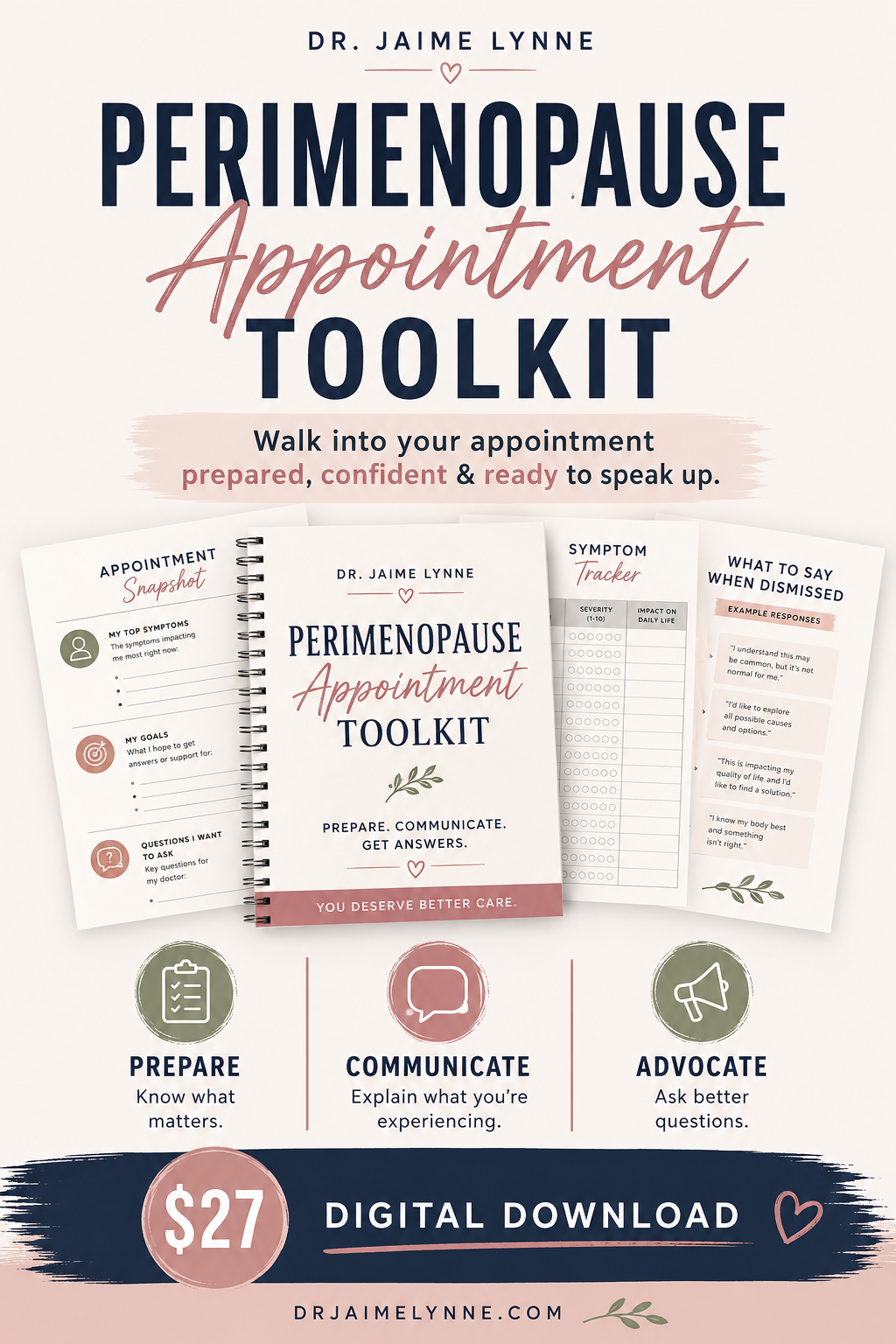
A practical, step-by-step toolkit to help you prepare for your appointment, communicate your symptoms clearly, ask the right questions, and leave feeling heard with a plan for what comes next.