
Stop Leaving Your Doctor’s Appointment With More Questions Than Answers.
Know what to say, what to ask, and how to explain what’s been going on so you can make the most of your time with your doctor and leave knowing what comes next.

DOES THIS SOUND LIKE YOU?
You know something has changed. You just want your doctor to understand what’s really been going on.
You finally make the appointment because the changes are adding up, the sleep, the mood, the energy, the weight, the brain fog… maybe symptoms you never even realized could be connected.
But then you’re sitting in the exam room and suddenly you have 15 minutes to explain months of feeling different.
Maybe you start with the symptom bothering you most.
“I’m exhausted all the time.”
Maybe you mention a few things, but leave others out because you’re not sure they matter.
“Is this even related?”
Or maybe you’ve brought it up before, only to hear:
“Your labs look normal.”
“This is probably just stress.”
“Let’s give it some time.”
So you leave and on the drive home you remember three other things you meant to ask.
And you're still wondering what’s actually going on and what you’re supposed to do next.
The problem isn't that you aren't paying attention to your body.
You know your body better than anyone. But knowing something has changed and knowing how to explain the full picture to your doctor are two very different things.
SO HOW DO YOU MAKE THOSE 15 MINUTES COUNT?
THERE’S ONE THING THAT CAN CHANGE THE CONVERSATION AT YOUR NEXT APPOINTMENT...
Your doctor needs more than a list of symptoms, they need the full picture.
When something feels off, it’s natural to start listing everything that’s been happening.
The poor sleep. The anxiety that seemingly came out of nowhere. The weight changes. The brain fog. The exhaustion. The changes in your period. The fact that you just don’t feel like yourself anymore.
But here's the thing:
A long list of symptoms doesn't always tell your doctor what they really need to know.
What matters is helping them understand what has changed for you, when it started, how often it’s happening, and how it’s affecting your everyday life.
Because saying:
“I’ve been really tired lately.”
is different from saying:
“For the past four months, I’m waking up several times a night, struggling to get through the afternoon without needing to rest, and this is completely different from my normal.”
That gives your doctor something much more useful to work with.
And when you're trying to remember all of this while sitting on an exam table with the clock ticking? It's incredibly easy to forget the details that matter.
That's why preparing before the appointment can completely change the conversation.
You don't need to walk in knowing what's wrong.
You don't need to diagnose yourself.
And you definitely don't need to memorize a perfect script.
You just need a simple way to organize what you've been experiencing and communicate it in a way that helps your doctor understand the bigger picture.
And that’s exactly what I created for you.

Everything you need to prepare for a better conversation with your doctor.
You don’t need to spend hours researching what to say or walk into your appointment with pages of notes. I created this toolkit to help you pull together what’s been happening, decide what matters most, and prepare for the conversation before you’re sitting in the exam room trying to remember it all.
The Perimenopause Appointment ToolKit
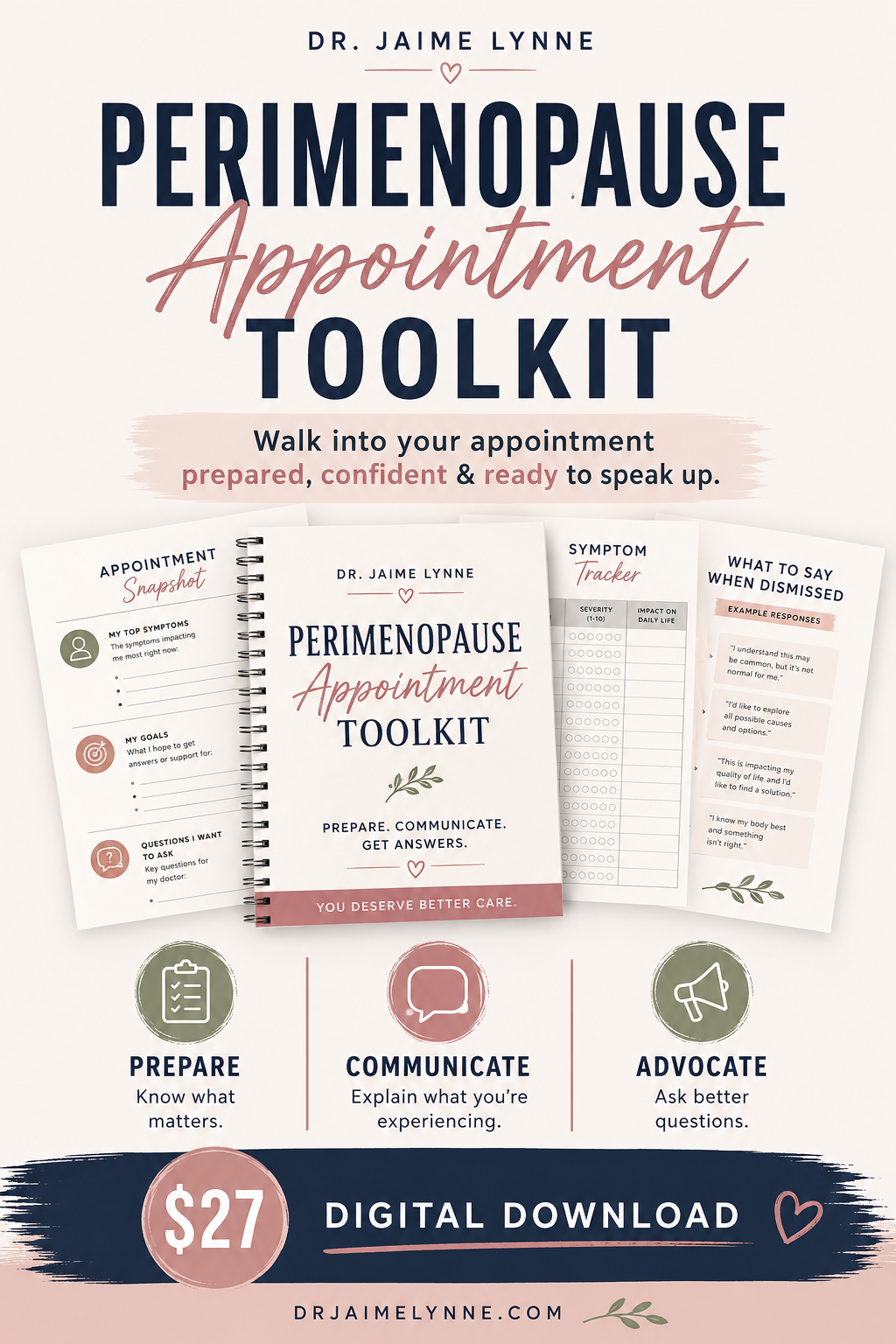
Inside, you’ll get:
✓ Doctor Visit Prep Guide
Know what to think through and write down before your appointment so you’re not trying to piece it together on the spot.
✓ Symptom Language Guide
Turn “I’m tired,” “I’m anxious,” or “I just don’t feel right” into information that better explains what has actually changed for you.
✓ What to Track and What Not to Track
Focus on the patterns and details that can actually help tell the story instead of documenting every little thing.
✓ Questions Worth Asking
Go in with questions about your symptoms, possible causes, treatment options, and what should happen next.
✓ What to Say When You Feel Dismissed
Simple language to help you keep the conversation going when you hear things like “your labs are normal,” “it’s probably stress,” or “let’s wait and see.”
✓ Leave With a Plan + Appointment Snapshot
Keep the most important information in one place and make sure you know what happens after the appointment not remember on the drive home what you forgot to ask.
No more trying to remember everything once the doctor walks into the room.

Hey there,
I’m Dr. Jaime Lynne
I’m a registered nurse, educator, and women’s health advocate who believes women deserve to understand what’s happening in their bodies and feel comfortable talking about it with their healthcare providers.
After years of working in healthcare and educating patients and healthcare professionals, I’ve seen how difficult it can be to fit a complicated health story into a short appointment.
And perimenopause can make that even harder.
Symptoms can seem unrelated. They can change from month to month. And when you’re experiencing several things at once, figuring out what matters, what to mention, and how to explain it can feel overwhelming.
That’s why I created the Perimenopause Appointment Toolkit.
Not to tell you what diagnosis you have or what treatment you need, but to help you prepare for a better conversation with the healthcare professional who can.
Because you know your body.
My goal is to help you communicate what you’re noticing, ask the questions that matter, and take a more active role in the decisions being made about your health.
You deserve to be part of the conversation.