
Why Does Stress Feel So Much Worse in Perimenopause? What Women Need to Know

“Perimenopause doesn’t create new stress out of nowhere it changes how your body responds to the stress that’s already there.”
If you’ve noticed that the stress you used to manage easily now feels overwhelming, heavier, or harder to shake, you’re not imagining it. Many women in their 40s say things like:
“I get stressed so much faster than I used to.”
“My patience is gone.”
“Everything feels louder, bigger, more intense.”
And when you layer in a stressful season like the holidays, major family events, work deadlines, or any big life moment the emotional load can feel even more intense. The same responsibilities, interactions, or expectations that used to be fine suddenly feel overstimulating or exhausting.
This shift isn’t a personal failing. It’s biology, hormones, nervous system changes and a lack of information women should have been given years ago.
Let’s break down what’s really going on, why stress feels different now, and what women can do to support themselves with clarity instead of confusion.
Why Does Stress Hit Harder in Perimenopause?
Hormones directly shape how your brain processes stress.
Estrogen and progesterone help regulate mood, emotional resilience, cortisol, and the nervous system. When these hormones start fluctuating, sharply and unpredictably, your internal “stress buffer” weakens.
This is why you may find yourself:
crying more easily
feeling overstimulated
reacting more intensely
getting irritated quicker
having trouble calming down
feeling anxious for “no reason”
Your stress response hasn’t gotten worse, your hormonal support for managing stress has changed.
The symptoms are inconsistent because the hormones are inconsistent.
Perimenopause isn’t a slow decline, it’s a roller coaster. One week you feel grounded. The next you feel wired, tense, or emotionally thin. And sometimes these shifts happen within a single day.
This inconsistency leaves women feeling confused and often wondering: “Is this perimenopause, stress, or something else?” That’s a valid question and part of why clarity is so important.
Heightened stress hits harder during holidays, big events, and major life seasons.
Periods of extra stress (like the holiday season) naturally raise cortisol. In perimenopause, your body has a harder time regulating these spikes.
This can show up as:
disrupted sleep
shorter fuse
overwhelm
emotional intensity
exhaustion after social gatherings
tension headaches
brain fog
It’s not “holiday stress” alone, it’s holiday stress + shifting hormones.
Women weren’t taught what perimenopause actually is.
Most women enter this phase without education, preparation, or context. We were told about puberty and pregnancy, but this? Hardly at all.
So when stress feels different, women often assume:
it’s burnout
it’s age
it’s a personal issue
it’s a mental health concern
it’s just “how things are now”
Meanwhile, the root is physiological.
The internet gives more noise than clarity.
You’ve probably noticed…Every article and expert seems to contradict the last. Some say lift heavy, some say slow down, cut out sugar, and cut carbs. Some say supplements or meditation is the answer. It’s overwhelming, especially when you’re already overwhelmed.
This is the point where most women ask:
“So what does my body need right now?”
A Natural Place to Begin Is To Understand What Your Body Needs
Perimenopause is not one-size-fits-all. Stress shows up differently for every woman and so does the support she needs. This is exactly why I created my quiz:
“What Support Does My Body Need in Perimenopause?”
It’s not diagnostic and it’s not designed to overwhelm you. It simply helps you identify your starting point, the one area that will give you the most relief and stability right now.
What Can Women Do to Support Themselves During Stressful Periods while in Perimenopause?
Here are foundational pieces that help women feel grounded, especially during seasons of increased stress like the holidays or major life transitions.
1. Understand Your Patterns
Patterns tell the truth. They reveal when stress spikes, how symptoms fluctuate through the month, and what might be triggering what. During busy or emotionally heavy seasons, patterns often become clearer.
Helpful tool:
My Perimenopause Action Plan Inside, you’ll find hormone explanations, symptom tracking pages, and scripts to guide your conversations with your doctor, including what to say if your concerns aren’t taken seriously. Download it for free now!

2. Support Your Nervous System
Perimenopause isn’t the time to push through stress, it’s the time to support your body in managing it. Helpful daily practices include:
walking outdoors
deep breathing or short grounding practices
consistent bedtime routines
reducing overstimulation
limiting high-intensity workouts on high-stress days
This isn’t about doing “all the things.” It’s about choosing what regulates your body instead of draining it.
3. Build Confidence to Speak Up About What You Need
During stressful seasons, it’s easy to fall into the habit of taking on too much. But advocating for your needs with family, at work, with a partner is a core part of stress management in perimenopause. Communication becomes a hormonal support strategy.
4. Know What to Ask Your Healthcare Provider
Emotional changes, sleep disruption, overwhelm, and heightened stress sensitivity are common perimenopause symptoms even with normal labs.
Questions to ask:
“Could my symptoms be related to perimenopause?”
“What treatment or support options exist for stress-related symptoms?”
“Can we discuss progesterone support, non-hormonal options, or hormonal therapy?”
Your Perimenopause Action Plan makes this conversation easier and clearer.
5. Start With One Clear Direction
This is where most women get stuck, trying to fix everything at once. You don’t need a massive overhaul. You need one step that creates relief and momentum.
The quiz gives you that starting point:
“What Support Does My Body Need in Perimenopause?”
It helps you focus instead of guessing.
Final Thoughts: Stress in Perimenopause Has a Root And There Is a Path Forward
Your stress response feels different now because your hormones, nervous system, and emotional processing are shifting all at once. Add a stressful season or big life moment, and the effects become even more pronounced. With the right clarity and tools, you can support yourself in a way that feels sustainable, not overwhelming.
Your next steps:
Take the quiz to get direction
Download the Perimenopause Action Plan to track symptoms and patterns
Bookmark this blog for reference
Explore the resources on my website
Join my newsletter for science-backed strategies and real support straight to your inbox.
Perimenopause isn’t predictable, but your path through it can be clearer than you think.

Hi, I’m Dr. Jaime Lynne
A women’s health advocate and educator passionate about helping women navigating the confusing and often overlooked journey of perimenopause. Through my work and resources, I empower women to recognize their symptoms, speak up, and get the care they deserve.
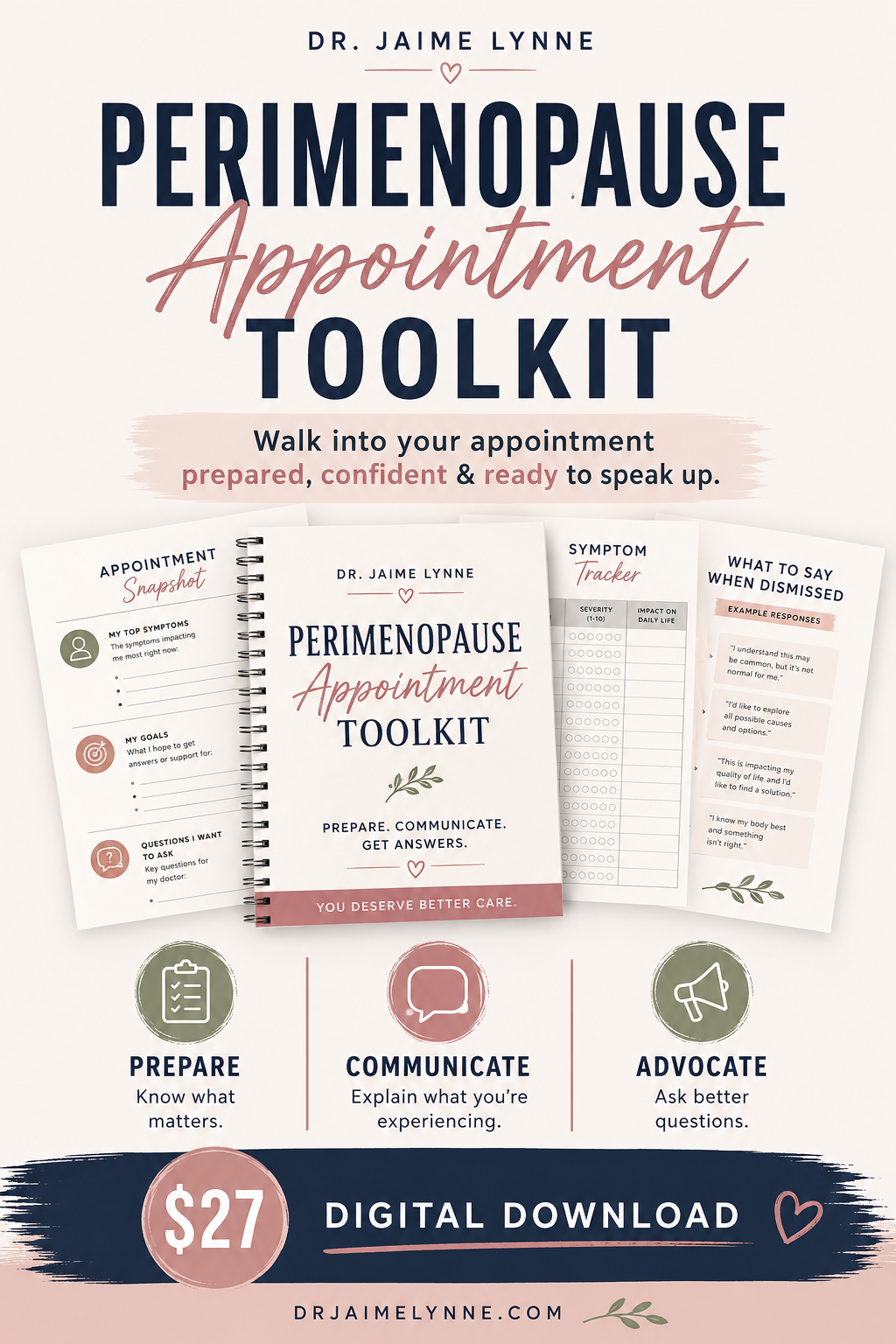
A practical, step-by-step toolkit to help you prepare for your appointment, communicate your symptoms clearly, ask the right questions, and leave feeling heard with a plan for what comes next.