
Why Perimenopause Wrecks Your Sleep And What You Can Do About It

“If you’re searching for Why can’t I sleep during perimenopause? the answer is that fluctuating hormones disrupt every part of your sleep system, from temperature control to stress hormones to how your brain winds down at night.”
Sleep problems in your 40s and 50s are not random. They aren’t just “stress,” and they aren’t just aging. They are one of the most common and earliest signs of perimenopause, often starting years before cycles become irregular.
If you’re waking between 2–4 a.m., tossing with night sweats, falling asleep only to jolt awake, or lying awake wired while exhausted… these are hallmark symptoms of shifting estrogen and progesterone.
Let’s break down what’s going on and more importantly, what you can do about it.
Why Does Perimenopause Make Sleep So Difficult?
Your hormones are directly tied to sleep and they’re fluctuating constantly.
Estrogen and progesterone play major roles in regulating melatonin, cortisol, temperature, and your brain’s ability to wind down. When they rise and fall unpredictably (which is exactly what happens in perimenopause), the parts of your brain responsible for deep sleep become less stable.
This can feel like:
falling asleep but not staying asleep
waking drenched in sweat
feeling emotionally “revved up” at night
waking with a pounding heart
tossing and turning without a clear reason
Solution:
Supporting your hormones, not just your sleep habits is key. Many women benefit from lifestyle adjustments, but others see dramatic improvement when discussing progesterone support with their doctor. Progesterone has a naturally calming effect on the brain and often helps restore deeper, more consistent sleep. Additionally, magnesium glycinate (taken at night) can support muscle relaxation, nervous system regulation, and deeper sleep cycles.
Your internal thermostat becomes more sensitive.
If you wake suddenly and feel hot, flushed, or sweaty, this isn’t random. Estrogen helps regulate body temperature. When estrogen dips, even temporarily, the brain misreads temperature signals and triggers a “cool down,” which wakes you up.
Solution:
Try layering your bedding, keeping the bedroom cooler, avoiding alcohol (it triggers night sweats for many women), and practicing slow breathing to help the nervous system settle when you do wake. Women who struggle with night sweats often find relief when balancing hormones through lifestyle shifts, supplements, or hormone therapy depending on what works best for them.
Your stress response changes making nights harder.
Perimenopause heightens cortisol sensitivity. The things that felt manageable before may now feel louder, heavier, or more stimulating, especially at bedtime.
Many women describe feeling “tired but wired.” You’re exhausted, but your brain is alert, replaying the day or anticipating tomorrow.
Solution:
Focus on earlier-in-the-day stress regulation rather than waiting until nighttime to unwind.
This may look like:
short outdoor walks
deep breathing during transitions
a consistent wind-down routine
limiting screen time an hour before bed
creating boundaries during high-stress seasons like the holidays
If cortisol spikes are waking you at 2–4 a.m., stabilizing blood sugar during the day may also help.
Progesterone declines and it’s your natural “calming” hormone.
Progesterone supports GABA production in the brain the neurotransmitter responsible for calm, rest, and deep sleep. As progesterone drops, especially before your period, sleep becomes lighter and more fragmented.
Solution:
Talk to your provider about whether bioidentical progesterone may be appropriate. Many women report deeper sleep, reduced nighttime anxiety, and fewer middle-of-the-night wakeups with proper progesterone support. Paired with magnesium glycinate and a structured wind-down routine, this can make a measurable difference.
Common Questions Women Ask About Perimenopause and Sleep
Why do I keep waking up at 2–4 a.m.?
This is when cortisol naturally begins to rise. In perimenopause, your brain becomes more reactive to these small increases. Add temperature swings or blood sugar dips and the combination makes this window a common wake-up time.
Try:
a protein-rich evening meal to keep blood sugar stable
regulating your room temperature
practicing a slow breathing technique when you wake
avoiding alcohol (even one drink disrupts this sleep cycle)
Why am I exhausted during the day but wired at night?
This indicates a dysregulated cortisol rhythm, often worsened by stress, irregular schedules, screen time, or progesterone fluctuations.
Try:
getting sunlight in the first hour of your day
avoiding high-intensity workouts in the late afternoon
shutting down screens earlier
establishing predictable routines your brain can rely on
And if this pattern is consistent, it may be worth looking at hormone support options.
How can I tell what my body needs most?
Sleep problems can be driven by hormone imbalance, stress, blood sugar instability, nervous system overload, or a combination. If you're not sure where to start, take my quiz:
“What Support Does My Body Need in Perimenopause?”
It helps you get direction without trying to solve everything at once.
What Should I Bring to My Doctor if My Sleep Isn’t Improving?
Doctors respond best to patterns, not scattered symptoms. That’s why the Perimenopause Action Plan includes:
a breakdown of what’s happening hormonally
symptom tracking
how to talk to your doctor
what to say if you feel dismissed
examples of how sleep fits into the bigger hormonal picture
This helps you have a clearer, more productive conversation with your provider.

Final Thoughts: You Can Sleep Better in Perimenopause
Sleep disruption in perimenopause is incredibly common, but it’s also manageable once you understand the root causes.
Your next steps:
Take the quiz to learn what your body needs right now
Download the Perimenopause Action Plan so you can track your symptoms to see patterns
Talk with your doctor about progesterone or other sleep-supportive options
Sign up for my weekly newsletter to keep you updated on the latest tips, tricks and research about perimenopause
You don’t have to navigate this alone. With the right tools, your sleep can improve and so can your energy, mood, and overall sense of well-being.

Hi, I’m Dr. Jaime Lynne
A women’s health advocate and educator passionate about helping women navigating the confusing and often overlooked journey of perimenopause. Through my work and resources, I empower women to recognize their symptoms, speak up, and get the care they deserve.
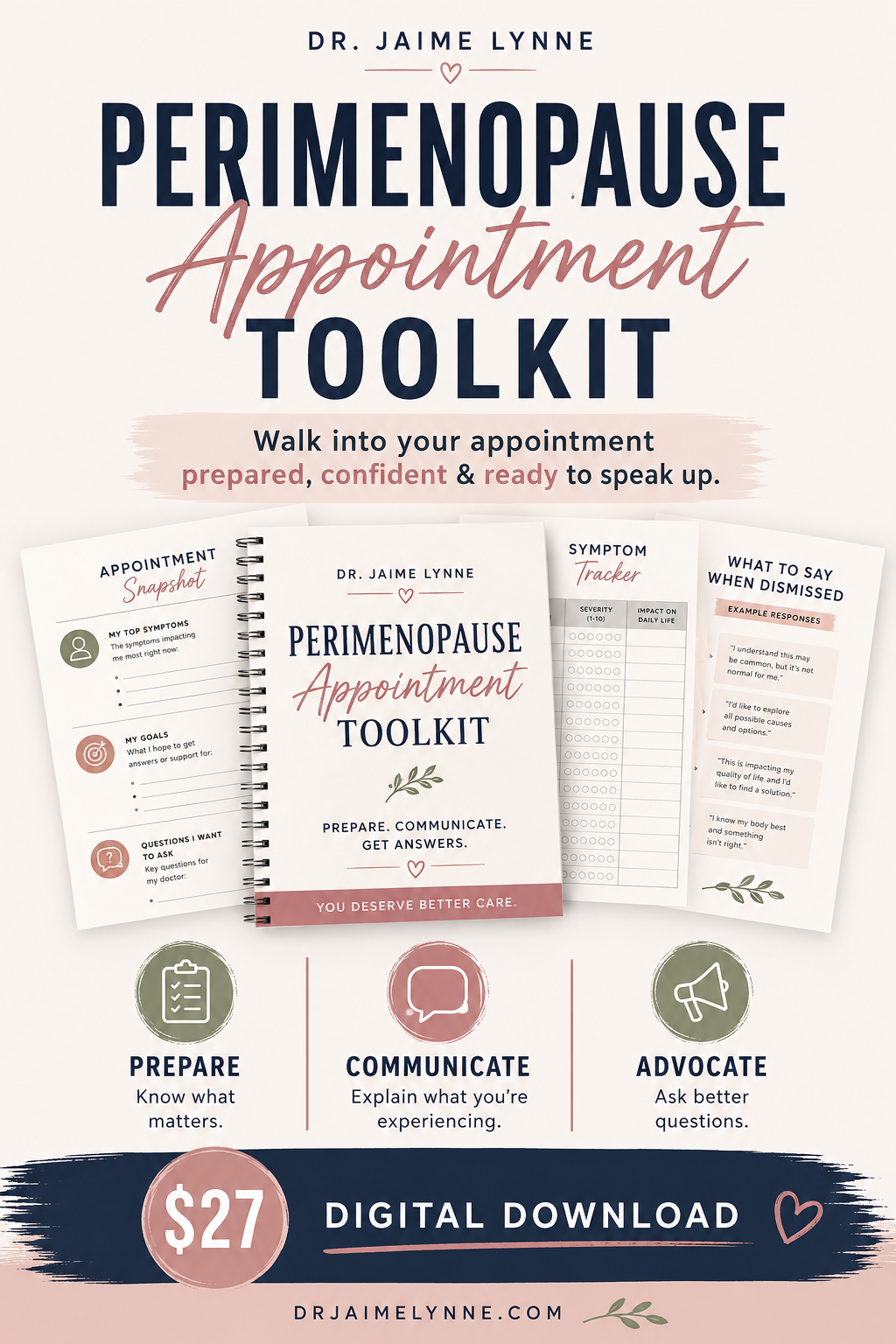
A practical, step-by-step toolkit to help you prepare for your appointment, communicate your symptoms clearly, ask the right questions, and leave feeling heard with a plan for what comes next.