
Perimenopause Symptoms Explained
What’s Normal, What’s Not, and Why You Feel So Off.
You already know something is off. You're not here looking for permission to feel that way, you're here for answers.
This post is designed to be your reference guide. The one you bookmark, come back to, and share with a friend who's nodding along to everything you've been feeling. We're going deeper than a symptom checklist for each one, we're talking about why it's happening in your body and what you can actually do about it.
Because once you understand the why, the symptoms stop feeling random. And that shift from confusion to clarity changes everything.
Want to know which symptoms are most relevant to your body right now? The quiz takes 2 minutes and gives you a personalized starting point.
First: Why Perimenopause Symptoms Feel So Random
Perimenopause symptoms aren't random they just feel that way because most of us were never taught what's actually driving them.
During perimenopause, estrogen and progesterone don't decline in a clean, predictable slope. They fluctuate sometimes dramatically before eventually settling at menopause. One month estrogen surges higher than normal. The next it drops sharply. Progesterone often declines earlier and more steadily, removing the natural calming effect it used to provide.
Those fluctuations touch your brain chemistry, your nervous system, your metabolism, your sleep, your joints, your skin, and your cardiovascular system. Which is why perimenopause can feel like twenty different things are going wrong at once when really, it's one hormonal transition rippling through your whole body.
This phase can last anywhere from four to ten years. Symptoms often begin years before your period becomes irregular, which is why so many women are told "your labs look fine" while feeling anything but.
The Most Common Perimenopause Symptoms (And Why They Happen)
Fatigue and Low Energy
What it feels like: Not just tired bone-deep exhausted. You sleep and wake up still depleted. You hit a wall mid-afternoon that no amount of coffee touches.
Why it happens: Disrupted sleep from hormonal shifts means you're rarely getting the restorative rest your body needs. On top of that, blood sugar fluctuations from changing estrogen levels create energy crashes throughout the day. Your body is also working harder than usual to manage hormonal chaos that has a metabolic cost.
What helps: Prioritizing sleep quality over quantity, stabilizing blood sugar through protein-forward meals, and strength training to rebuild metabolic resilience.
Sleep Problems
What it feels like: Trouble falling asleep, waking at 3am unable to get back to sleep, or sleeping a full night and still feeling exhausted.
Why it happens: Progesterone has a sedative, calming effect and it's often the first hormone to decline significantly in perimenopause. Less progesterone means a nervous system that can't downregulate the way it used to. Add fluctuating estrogen (which regulates your body's temperature control and sleep architecture) and night sweats, and sleep becomes genuinely difficult.
What helps: Magnesium glycinate before bed, a consistently cool and dark room, eliminating screens an hour before sleep, and waking at the same time daily to anchor your circadian rhythm.
Sleep disruption in perimenopause deserves its own deep dive. 👉 Read: Why Perimenopause Wrecks Your Sleep and What to Do About It →
Mood Changes, Anxiety, and Irritability
What it feels like: Feeling emotionally raw, snapping at people you love, crying over things that wouldn't have touched you before, or carrying a low hum of anxiety that won't quit.
Why it happens: Estrogen directly supports serotonin and dopamine your brain's primary mood-regulating chemicals. When estrogen fluctuates, those chemicals fluctuate with it. Meanwhile, declining progesterone removes a natural source of calm from your nervous system. The result is a brain that is genuinely less chemically equipped to regulate emotion than it used to be.
What helps: Nervous system regulation practices (breathwork, walking, adequate sleep), reducing caffeine and alcohol, and speaking with both your doctor and a therapist if anxiety is significantly disrupting your daily life.
Mood changes and mental health shifts in perimenopause are more connected than most people realize. 👉 Read: Mental Health Changes and Perimenopause →
Brain Fog
What it feels like: Forgetting names mid-sentence. Losing your train of thought. Reading the same paragraph three times. Feeling mentally slower than you used to and noticing it.
Why it happens: Estrogen plays a direct role in cognitive function, memory, and the speed of neural signaling. When levels fluctuate, so does your mental clarity. Poor sleep compounds this significantly. Many women describe brain fog as one of the most unsettling symptoms because it feels so unfamiliar.
What helps: Blood sugar stability, quality sleep, regular aerobic movement (which supports brain health), and reducing the cognitive load on your plate where possible.
Weight Gain Especially Around the Belly
What it feels like: Gaining weight without changing what you eat. Fat shifting to your midsection in a way that feels sudden and stubborn. Nothing that used to work working anymore.
Why it happens: Declining estrogen changes where your body prefers to store fat shifting it from hips and thighs to the abdomen. At the same time, insulin resistance becomes more common, meaning your cells are less efficient at processing carbohydrates. Muscle loss from declining testosterone slows your metabolism further. And elevated cortisol from poor sleep drives additional belly fat storage.
What helps: Significantly increasing protein intake, strength training over chronic cardio, blood sugar management, and treating sleep as a metabolic priority, not a luxury.
This one deserves a full post because there's a lot more to it than just eating less. 👉 Read: Perimenopause and Weight Gain: Why It Happens and What You Can Do →
Hot Flashes and Night Sweats
What it feels like: A sudden wave of heat sometimes intense, sometimes brief that can leave you flushed, sweating, and then chilled. At night, this often means waking up soaked.
Why it happens: Estrogen helps regulate your body's internal thermostat. When levels fluctuate, the hypothalamus (your brain's temperature control center) becomes hypersensitive interpreting normal body temperature as overheating and triggering a cooling response that isn't actually needed.
What helps: Keeping your sleep environment cool, wearing breathable fabrics, reducing alcohol and spicy foods (common triggers), and discussing hormone therapy options with your provider if they're significantly impacting your quality of life.
Irregular or Changing Periods
What it feels like: Cycles that are shorter or longer than usual, heavier or lighter flow, spotting between periods, or increasingly unpredictable timing.
Why it happens: As your ovaries produce less consistent hormones, ovulation becomes irregular. Without the hormonal coordination that used to govern your cycle, the timing and nature of your period changes sometimes dramatically from month to month.
What helps: Tracking your cycle carefully. Any very heavy bleeding, bleeding between periods, or sudden changes should always be discussed with your provider to rule out other causes.
Low Motivation and Feeling Flat
What it feels like: Losing interest in things that used to excite you. Feeling like your drive, spark, or sense of purpose has dimmed without explanation.
Why it happens: Testosterone often overlooked in women is responsible for motivation, mental drive, libido, and energy. It declines gradually throughout perimenopause, and because the change is subtle, many women don't connect it to how they feel until they look back.
What helps: Strength training (which supports testosterone naturally), adequate protein, quality sleep, and a conversation with your provider about whether testosterone levels are worth checking.
The Less-Talked-About Symptoms (That Are Still Very Real)
These are the ones that catch women completely off guard because nobody warned them.
Heart palpitations — Estrogen regulates your autonomic nervous system. When it fluctuates, that system can misfire, causing a racing or fluttering heart that has nothing to do with cardiac disease. Always rule out heart issues first, but know that hormone-related palpitations are extremely common.
Joint pain and stiffness — Estrogen has anti-inflammatory properties and supports joint lubrication. As it declines, stiffness and achiness move in often mistaken for early arthritis.
Headaches and migraines — Estrogen fluctuations are a well-established migraine trigger. If your headaches have gotten worse or more frequent, hormones are likely a contributing factor.
Digestive changes and bloating — Estrogen and progesterone both influence gut motility. Hormonal shifts can slow digestion, increase bloating, and make your gut more reactive than it used to be.
Skin changes — Estrogen supports collagen and skin hydration. As levels fluctuate, skin can become drier, thinner, itchier, or more sensitive seemingly overnight.
Increased sensitivity to stress — Progesterone's calming effect on the nervous system is largely gone. Things that used to roll off you now land harder. This is biochemical, not a character flaw.
There are even more symptoms that most providers never connect to perimenopause. 👉 Read: 9 Commonly Overlooked Symptoms of Perimenopause →
How Do You Know If It's Perimenopause or Something Else?
This is one of the most important questions to sit with because perimenopause symptoms can mimic thyroid dysfunction, autoimmune conditions, depression, and more. Other conditions can also exist alongside perimenopause.
Perimenopause symptoms tend to:
Show up gradually and build over time
Fluctuate week to week or month to month
Cluster together rather than appear in isolation
Stop responding to things that used to work
Correlate with your cycle or hormonal patterns
That said, never let anyone (including yourself) automatically attribute everything to perimenopause without ruling out other causes. Tracking your symptoms carefully and bringing that record to your provider is the most important thing you can do.
One blood draw rarely tells the full story because hormone levels fluctuate so much. Patterns over time matter far more than a single number.
There's No One-Size-Fits-All Answer — And That's Why You Feel Stuck
Most women in perimenopause aren't struggling because they're not trying hard enough. They're struggling because they're getting generic advice for a deeply individual transition.
What helps one woman's sleep won't necessarily help yours. What moves the needle on weight for one body may do nothing for another. Effective support in perimenopause has to be targeted to your symptom pattern — not a protocol designed for someone else.
That's the whole reason I built the Perimenopause Support Hub a program specifically for women navigating this transition who are done guessing and ready for a clear, structured, supported path forward. Clarity on your hormones, confidence in advocating for yourself, practical tools that actually match your body, and a community of women who get it.

Your Next Step
If this post helped things click into place, here's where to go from here:
Get your personalized starting point:
Walk into your next appointment prepared:

Keep reading these posts go deeper on specific symptoms:
👉 Perimenopause and Weight Gain: Why It Happens and What You Can Do
👉 9 Commonly Overlooked Symptoms of Perimenopause
Want Ongoing Support?
Join my weekly newsletter for science-backed symptom breakdowns, hormone education, and practical strategies delivered straight to your inbox. No fluff, no overwhelm, just clarity.

You're not falling apart. You're not imagining it. Your body is in a real transition and understanding it is the first step to feeling like yourself again.

Hi, I’m Dr. Jaime Lynne
A women’s health advocate and educator passionate about helping women navigating the confusing and often overlooked journey of perimenopause. Through my work and resources, I empower women to recognize their symptoms, speak up, and get the care they deserve.
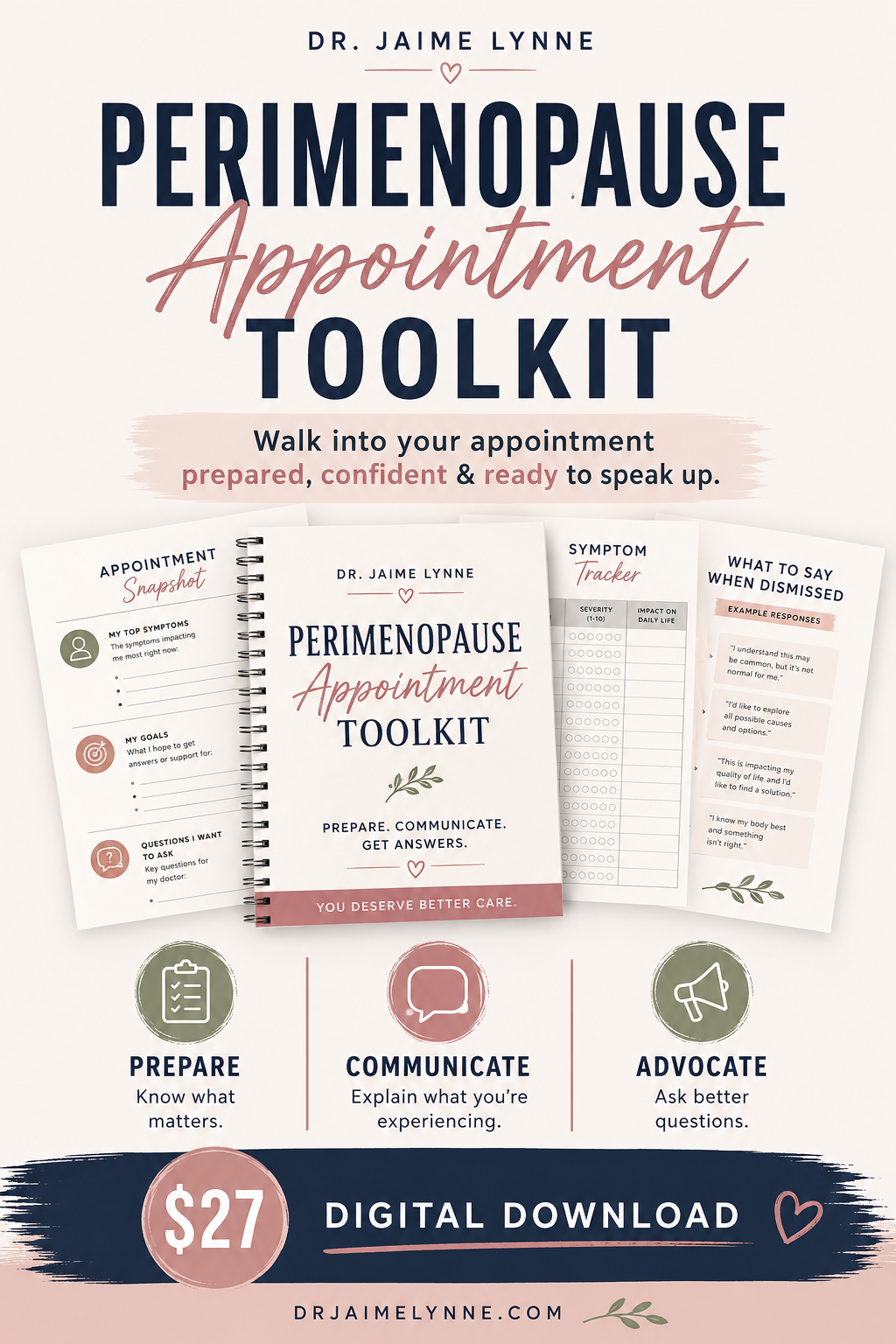
A practical, step-by-step toolkit to help you prepare for your appointment, communicate your symptoms clearly, ask the right questions, and leave feeling heard with a plan for what comes next.