
Women’s Health After 40: 10 Things You Should Be Doing

There’s something about your 40s that makes you start paying a little more attention to your health.
Maybe it’s because your body suddenly seems to have its own agenda. You’re not sleeping the same. Your periods are changing. Your energy is all over the place. Things that used to work for you… don’t anymore.
Or maybe you feel great and simply find yourself thinking, what should I actually be doing now to stay healthy as I get older?
Because I think a lot of us reach this point where we realize we don’t just want to look healthy. We want to feel good, stay strong, have energy and keep doing the things we love well into our 50s, 60s, 70s and beyond.
And our 40s are actually a really good time to start thinking about that.
They’re also the years when many of us find ourselves in perimenopause sometimes without even realizing it at first. Our hormones are changing, our bodies are changing, and suddenly we have a whole new list of questions we never thought we’d be asking.
Is this normal? Is this perimenopause? Should I be getting different labs? What screenings do I need now? Why am I waking up at 3 a.m.? And what can I actually do to stay healthy through all of this?
Those are the conversations I think we need to be having more often.
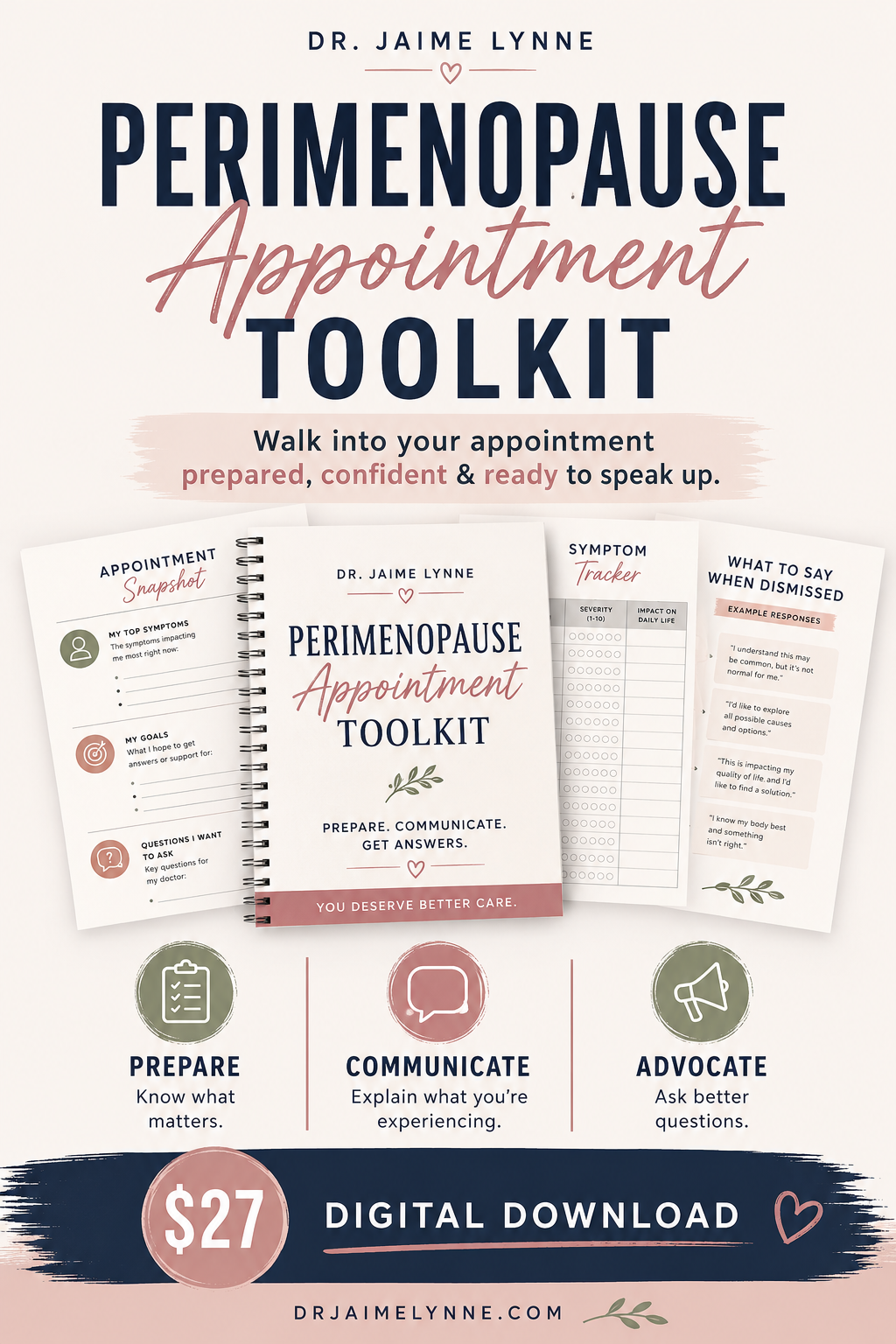
And if you’re already in the “something has definitely changed, but I don’t know how to explain it to my doctor” stage, I have something that can help. My Perimenopause Appointment Toolkit walks you through what’s actually worth tracking, how to talk about what you’re experiencing, questions to ask and what to say if you feel dismissed.
Take a look at the Perimenopause Appointment Toolkit
But whether you’re deep in perimenopause or just starting to think differently about your health, there are a handful of things that are worth having on your radar now.
10 Things Women Should Be Doing for Their Health After 40

1. Stay on top of preventive care.
Know which screenings and preventive visits you need and don't wait until something feels wrong.
2. Know your numbers.
Blood pressure, cholesterol, blood sugar and other important health markers tell you much more than the number on your scale.
3. Strength train.
Building and maintaining muscle now is an investment in your strength, metabolism, bones and independence later.
4. Move more throughout the day.
Walking and regular movement matter even if you don't consider yourself someone who “exercises.”
5. Eat to support your future health.
Think protein, fiber, plants, healthy fats and adequate nutrition, not simply eating less.
6. Take your sleep seriously.
Sleep changes are common during perimenopause, but poor sleep shouldn't automatically be accepted as your new normal.
7. Pay attention when your body changes.
New symptoms deserve attention, not a quick “I'm just getting older.”
8. Protect your bones before there's a problem.
Bone health becomes increasingly important as you approach menopause.
9. Take your heart health personally.
Blood pressure, cholesterol, blood sugar, movement, smoking, alcohol and sleep all matter.
10. Know your family history.
Your family's health history can help guide your own screening and prevention plan.
Now let's get into why each one matters and what you can actually do about it.
1. Stay on Top of Preventive Care
It’s easy to put off the doctor when nothing feels wrong, but your 40s are an important time to stay current with preventive care. Depending on your age and individual risk factors, that may include mammograms, cervical and colorectal cancer screening, blood pressure, cholesterol, blood sugar, eye and dental exams, vaccines and other screenings your provider recommends.
Why it matters: Many health conditions can develop before you ever notice symptoms. Staying on top of preventive care gives you the opportunity to identify risks earlier instead of waiting until there’s a problem.
And rather than simply asking, “Are all my labs normal?” try asking, “Based on my age, health and family history, what should we be watching?”
2. Know Your Numbers, Not Just Your Weight
We’ve spent a lot of years being taught to focus on the number on the scale, but after 40, I want you looking at the bigger picture.
Know your blood pressure, cholesterol, blood sugar/A1C and other health markers your provider recommends and pay attention to how they change over time.
Why it matters: Midlife and the menopause transition can bring changes in body composition, cholesterol, blood sugar and cardiovascular risk. Knowing your baseline makes it much easier to recognize when something is changing.
You don’t need to obsess over numbers. You just need to know yours.
3. Protect Your Muscle

Strength training after 40 is about so much more than changing how your body looks.
Maintaining muscle supports your strength, bones, metabolism and ability to stay active and independent as you get older. Aim to include strength training at least twice a week.
Why it matters: We naturally lose muscle as we age, and menopause can add another layer to changes in body composition. The muscle you protect now is muscle you’ll want when you’re 60, 70 and beyond.
And no, you don’t need to live in the gym.
Not sure how much strength training you actually need? Read: How Many Days a Week Should Women Strength Train in Perimenopause?
4. Move More Throughout the Day
Not every form of movement has to be a workout.
Walk after dinner. Take the stairs. Get outside. Take a ten-minute walk when you don’t have time for an hour at the gym. And try to break up long stretches of sitting.
Why it matters: Regular movement supports heart health, blood sugar, blood pressure, sleep, mood, bone health and weight management.
Walking may not feel fancy, but it’s one of the simplest things you can consistently do for your health.
Movement counts even when it isn’t a workout.
5. Eat to Support Your Future Health

After decades of being told to eat less, I’d rather women in their 40s start asking a different question:
Am I eating enough of what my body actually needs?
Focus on protein, fiber, fruits and vegetables, healthy fats, hydration and nutrients that support your muscles and bones. And yes, being mindful of how much alcohol you’re drinking belongs in this conversation too.
Why it matters: Nutrition in midlife isn't just about managing your weight. It supports your muscle, bones, energy, metabolic health and how well you age.
Protein is especially important as we get older. If you want to understand why, read Why Women Over 40 Need More Protein
And if you keep hearing about creatine, I break down the research in Should Women Over 40 Take Creatine? What the Science Says .
6. Take Your Sleep Seriously
If you suddenly find yourself wide awake at 3 a.m., waking up hot, feeling wired but tired or wondering why eight hours in bed somehow doesn't feel like eight hours of sleep, you’re not alone.
Sleep can change significantly during perimenopause.
Why it matters: Sleep affects your mood, memory, recovery, appetite, metabolic health, cardiovascular health and how you feel during the day. Poor sleep isn't something we should simply accept as part of getting older.
And if your sleep has suddenly changed, there may be more going on than needing a better bedtime routine.
Read: Why Perimenopause Wrecks Your Sleep and What You Can Do About It
7. Pay Attention When Your Body Starts Changing
This is a big one because our 40s are often when we start thinking:
“Something feels different, but I can’t quite explain it.”
Maybe your periods are changing. You're not sleeping. You're more anxious or irritable. You're experiencing brain fog, fatigue, hot flashes, changes in libido, vaginal dryness, headaches, joint symptoms or changes in your body composition.
Some of those changes can be related to perimenopause, but not everything that happens in your 40s should automatically be blamed on hormones.
Why it matters: Perimenopause can last for years, and many symptoms overlap with other health conditions. You don’t need to diagnose yourself, but you do want to notice patterns and be able to explain what has changed.
When did it start? How often is it happening? How is it affecting your day-to-day life? What have you already tried?
And if this is where you’re struggling, my Perimenopause Appointment Toolkitcan help you organize all of that before your appointment. It walks you through what’s worth tracking, how to describe your symptoms, questions to ask, how to bring up perimenopause and what to say if you feel dismissed.
Still wondering whether what you’re experiencing could be perimenopause? Start here: What Is Perimenopause?
8. Protect Your Bones Before There’s a Problem
Bone health probably isn't something most of us thought much about in our 20s or 30s. But our 40s are a good time to put it on the radar.
Strength training, weight-bearing activity, adequate nutrition and understanding your personal risk factors all play a role.
Why it matters: Estrogen helps protect bone, and bone loss accelerates around menopause. What you do before and during this transition can help support the bones you’ll rely on decades from now.
Talk with your healthcare provider about your personal osteoporosis risk and when bone-density screening may be appropriate for you.
9. Take Your Heart Health Personally

We talk a lot about breast health in women, and we should, but your heart deserves just as much attention.
Know your blood pressure, cholesterol and blood sugar. Move your body. Strength train. Don’t smoke. Prioritize sleep, eat well and be mindful of alcohol.
Why it matters: Cardiovascular risk becomes increasingly important as we move through midlife and menopause. And many of the habits that protect your heart also support your brain, bones, muscles and metabolic health.
That's one of my favorite things about healthy aging: you don't need 25 different health routines. The same foundational habits support your body in multiple ways.
10. Know Your Family History and Use It
Heart disease. Diabetes. Osteoporosis. Breast, ovarian or colorectal cancer. High cholesterol.
Knowing what runs in your family gives you information you can actually use.
Why it matters: Family history can influence your risk for certain conditions, when screening should begin and how closely your healthcare provider may want to monitor certain things.
Before your next physical, update what you know about your family history and bring it with you.
Then ask one simple question:
“Does my family history change anything you recommend for me?”
That’s the kind of conversation I want more women having with their healthcare providers.
Your Health After 40 Is Worth Paying Attention To
Taking care of yourself after 40 doesn’t mean doing everything perfectly or completely overhauling your life. It’s really about paying a little more attention to your numbers, your strength, your sleep, the changes you’re noticing and the things you may have been putting off.
Because what we do in our 40s isn’t just about feeling better today. We’re building the foundation for how we want to feel and live in our 50s, 60s, 70s and beyond.
So start with one thing. Schedule the appointment. Get the mammogram. Take the walk. Pick up the weights. Add more protein to your day. Ask the question you’ve been meaning to ask.
And if your body has been changing and you’re struggling to make sense of it or explain it once you’re sitting in the exam room my Perimenopause Appointment Toolkit can help you prepare for that conversation, know what’s worth tracking and walk into your appointment feeling more confident about what you want to discuss.
Get the Perimenopause Appointment Toolkit for $27 →
You don’t need to have it all figured out. You just need to start paying attention to the health you want to have later and taking care of her now.

Hi I’m Dr. Jaime Lynne
A women’s health advocate and educator passionate about helping women navigate the confusing and often overlooked journey of Perimenopause. I empower women to recognize their symptoms, speak up, and get the care they deserve.
A practical, step-by-step toolkit to help you prepare for your appointment, communicate your symptoms clearly, ask the right questions, and leave feeling heard with a plan for what comes next.